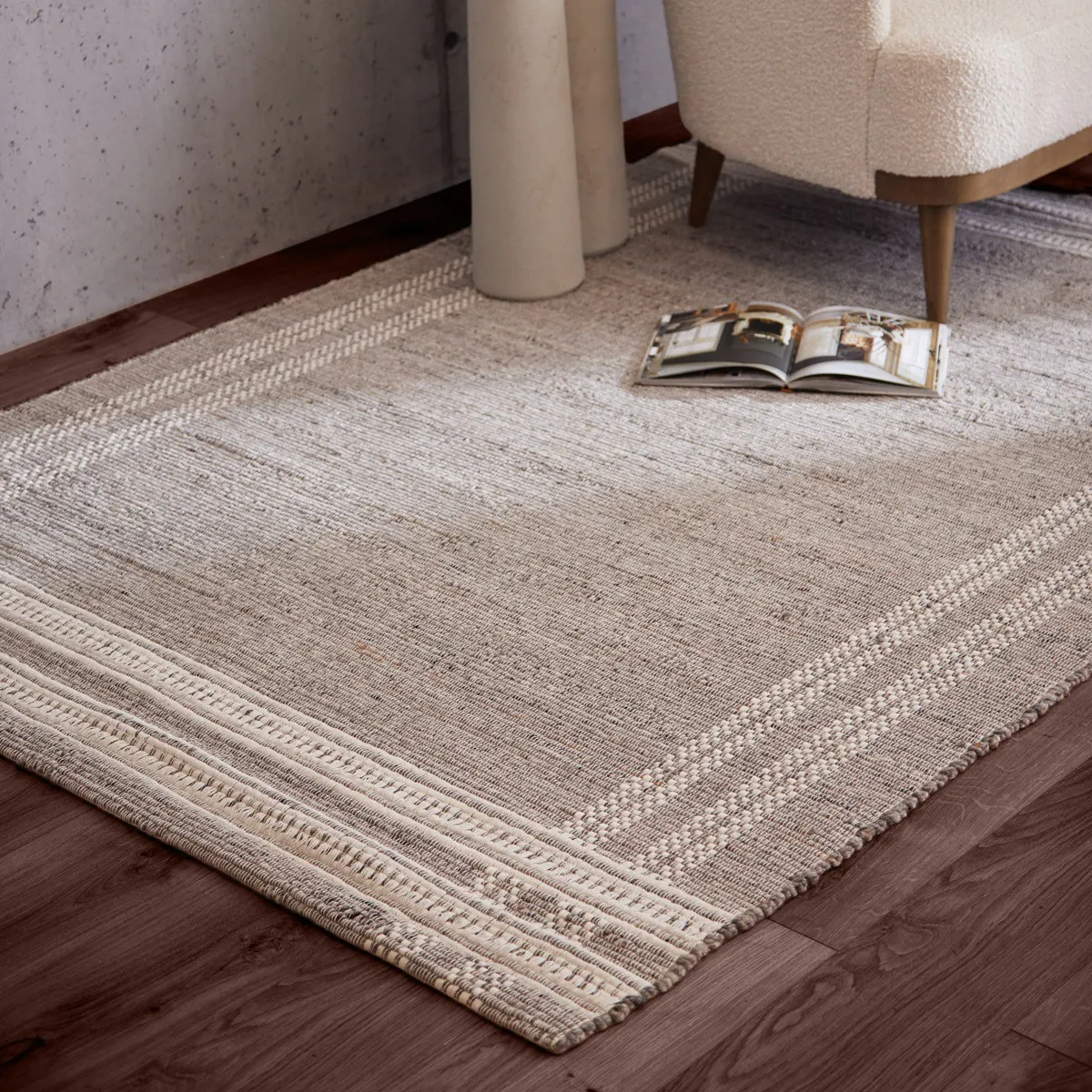
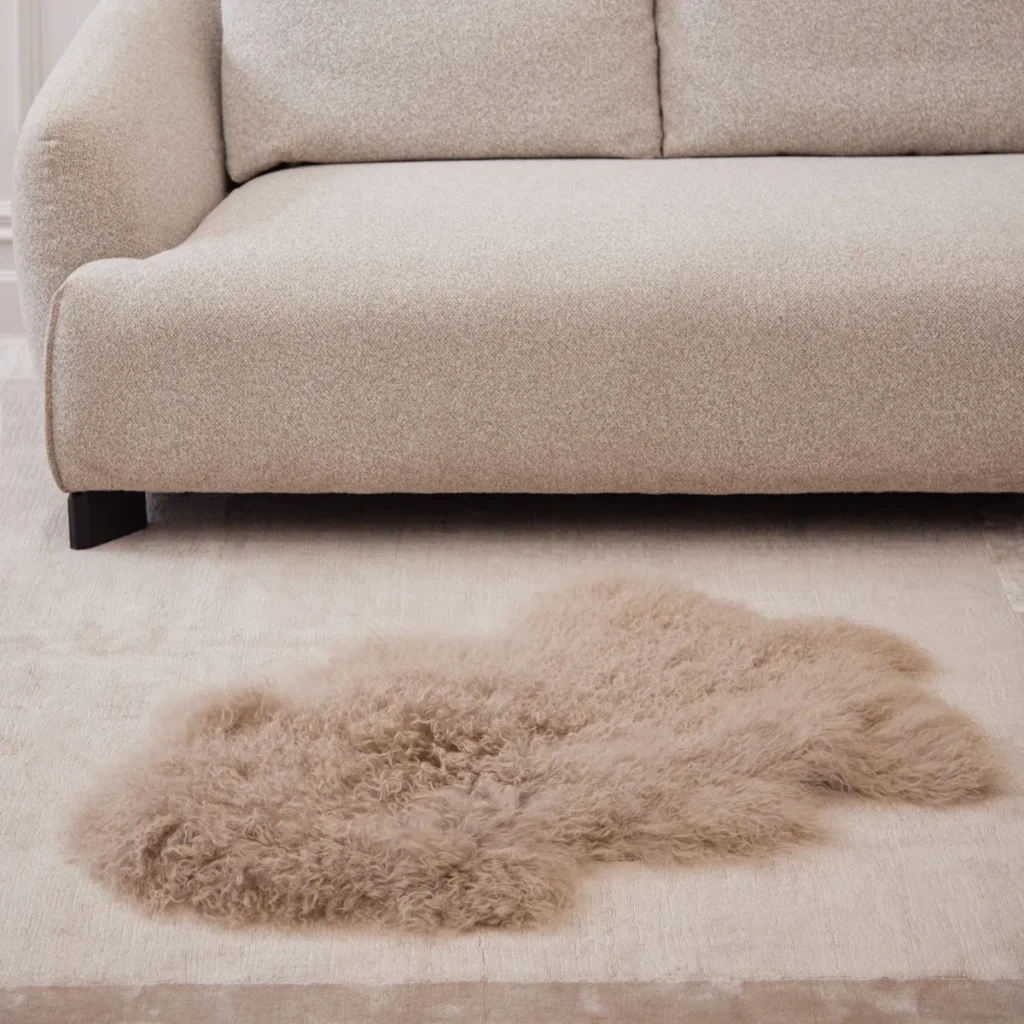
A rug is rarely just decoration. It’s usually doing one of three jobs: it’s holding a room together, softening something that feels too hard, or quietly fixing proportions that don’t quite work yet. The mistake most people make is treating it as an “afterwards” decision: something picked to match cushions or fill a gap. In reality, a good rug behaves more like flooring that happens to be removable: it sets tone, scale, and comfort all at once.
A rug often becomes one of the most important finishing touches in a room. It quietly brings warmth, defines space, and helps everything feel more connected. Whether it’s a hallway, living room, or bedroom, the right rug tends to settle a space rather than change it entirely.
At Meadows & Byrne, rugs are typically chosen with this in mind; natural textures, considered tones, and designs that work comfortably across seasons and interiors rather than leading a trend. It’s less about making a statement and more about creating balance in the home.
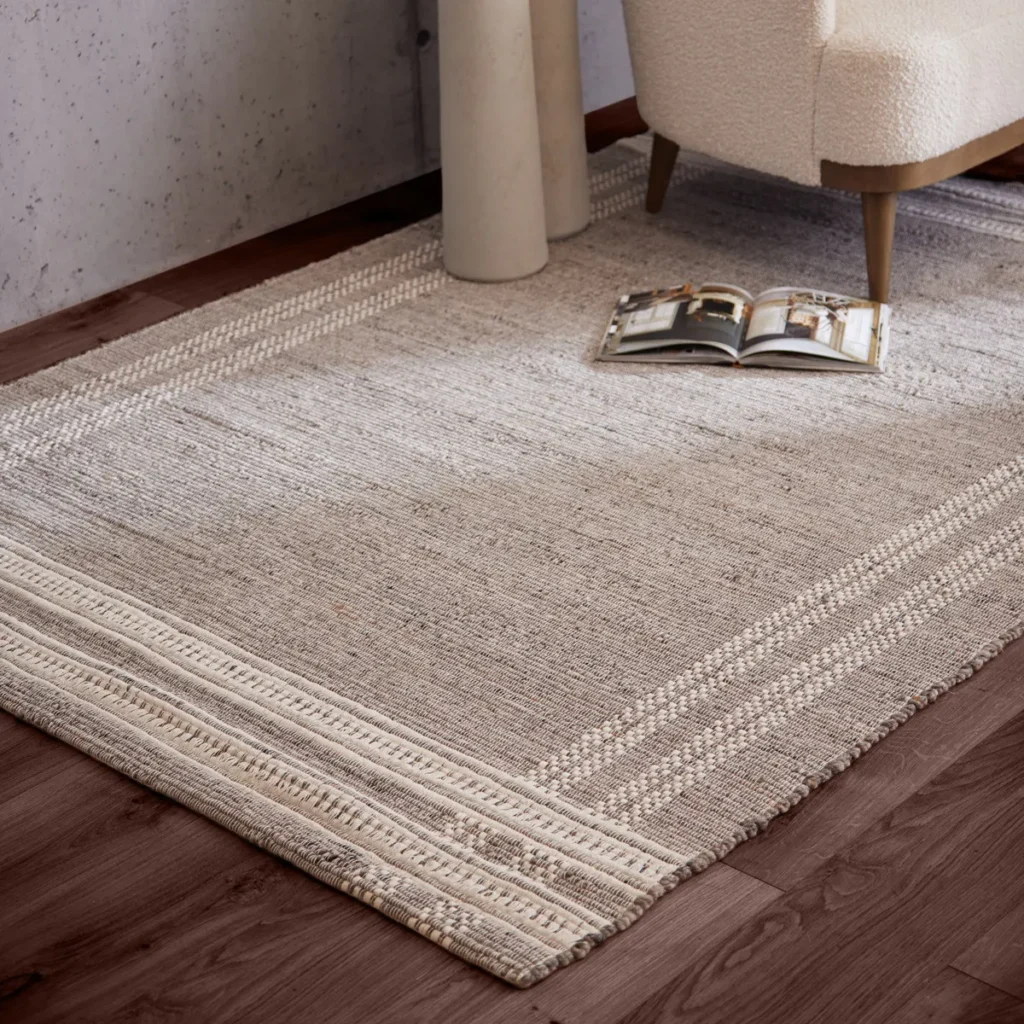
Think First About How the Space is Used
Before focusing on colour or pattern, it helps to think about what the rug needs to do in the room.
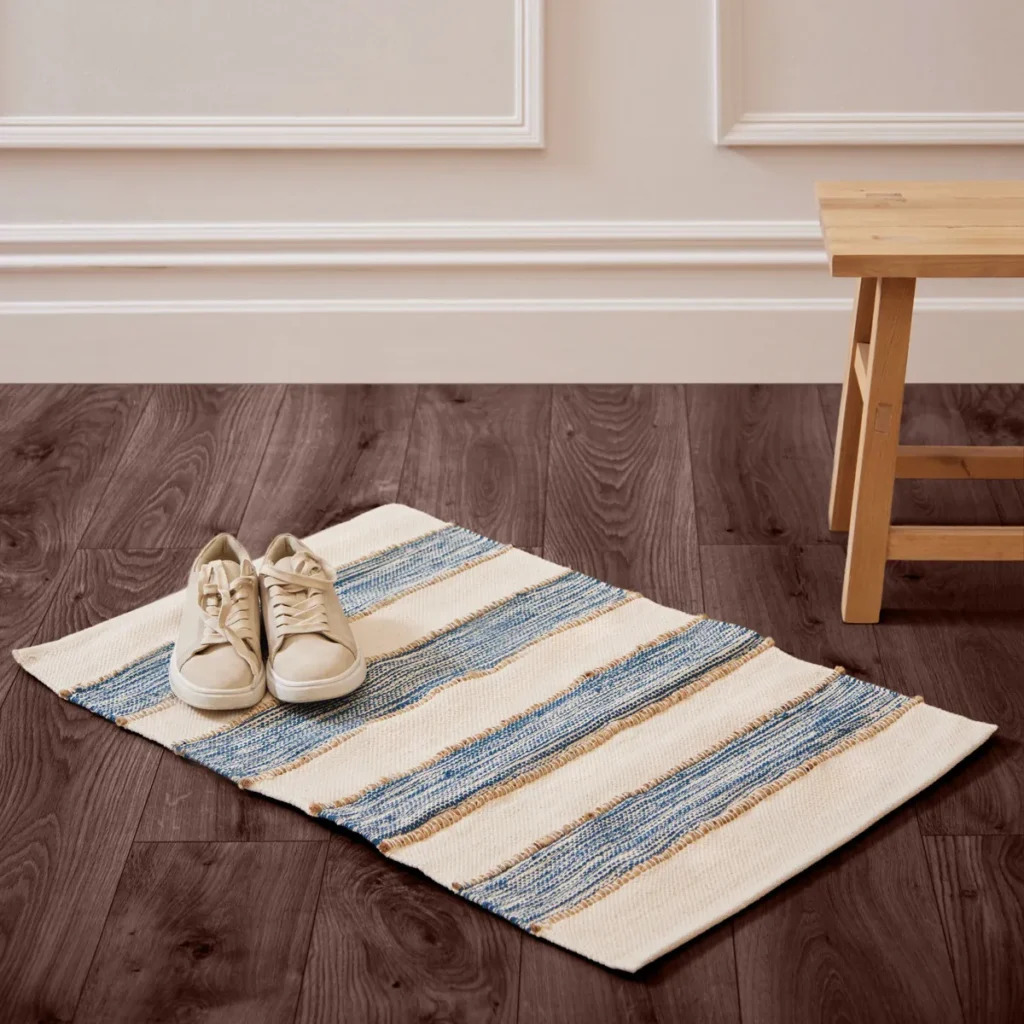
In a hallway, it might bring warmth underfoot and soften sound. In a living room, it often helps define the seating area and bring furniture together. In a bedroom, it can add comfort first thing in the morning. In each case, the rug is working quietly in the background, supporting how the space is lived in day to day.
Size is Not a Detail, It Is a Decision
One of the most useful considerations is simply scale. Most rugs fail because they’re too small, not because they’re the wrong colour.
A small rug creates a “floating island” effect where furniture feels disconnected. A properly sized rug does the opposite: it pulls seating, tables, and movement paths into one coherent zone. In living rooms especially, the rug should usually extend beyond the furniture grouping, not sit under a coffee table like a placemat.
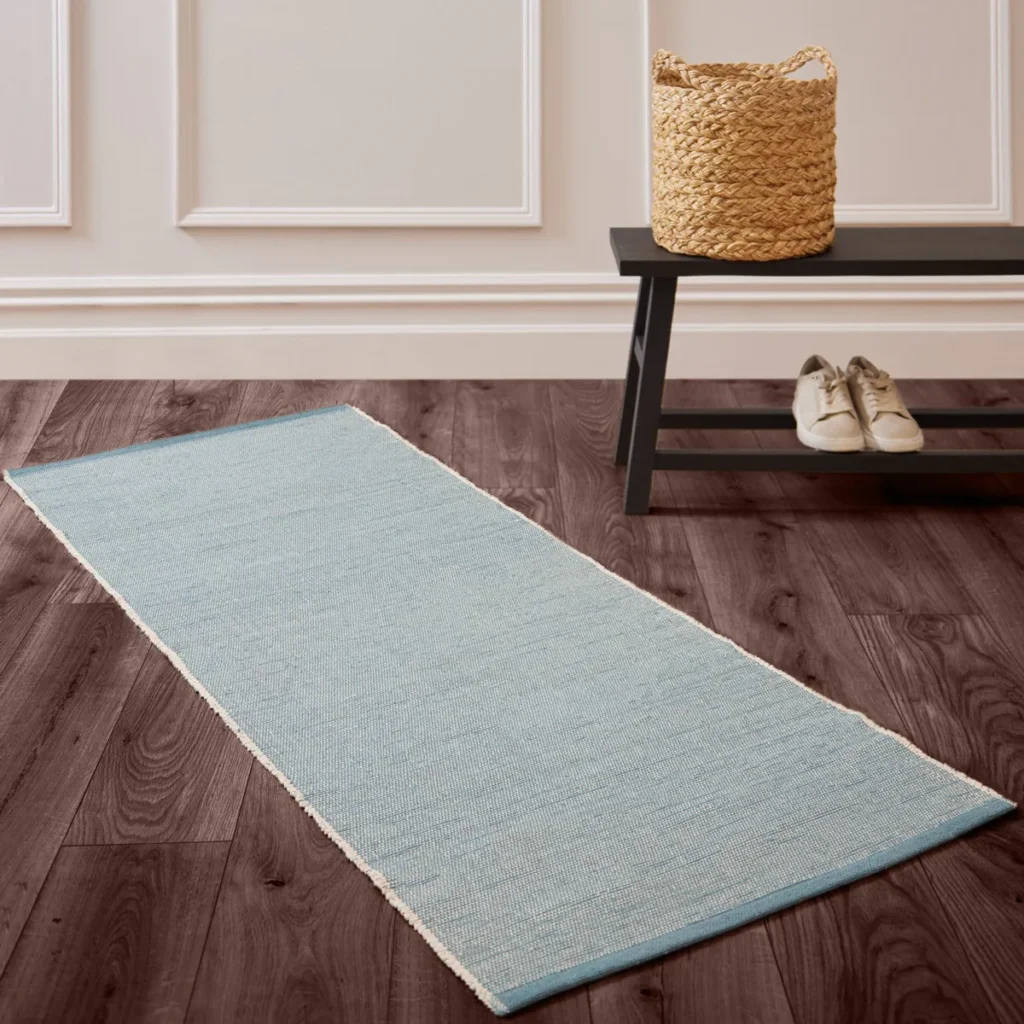
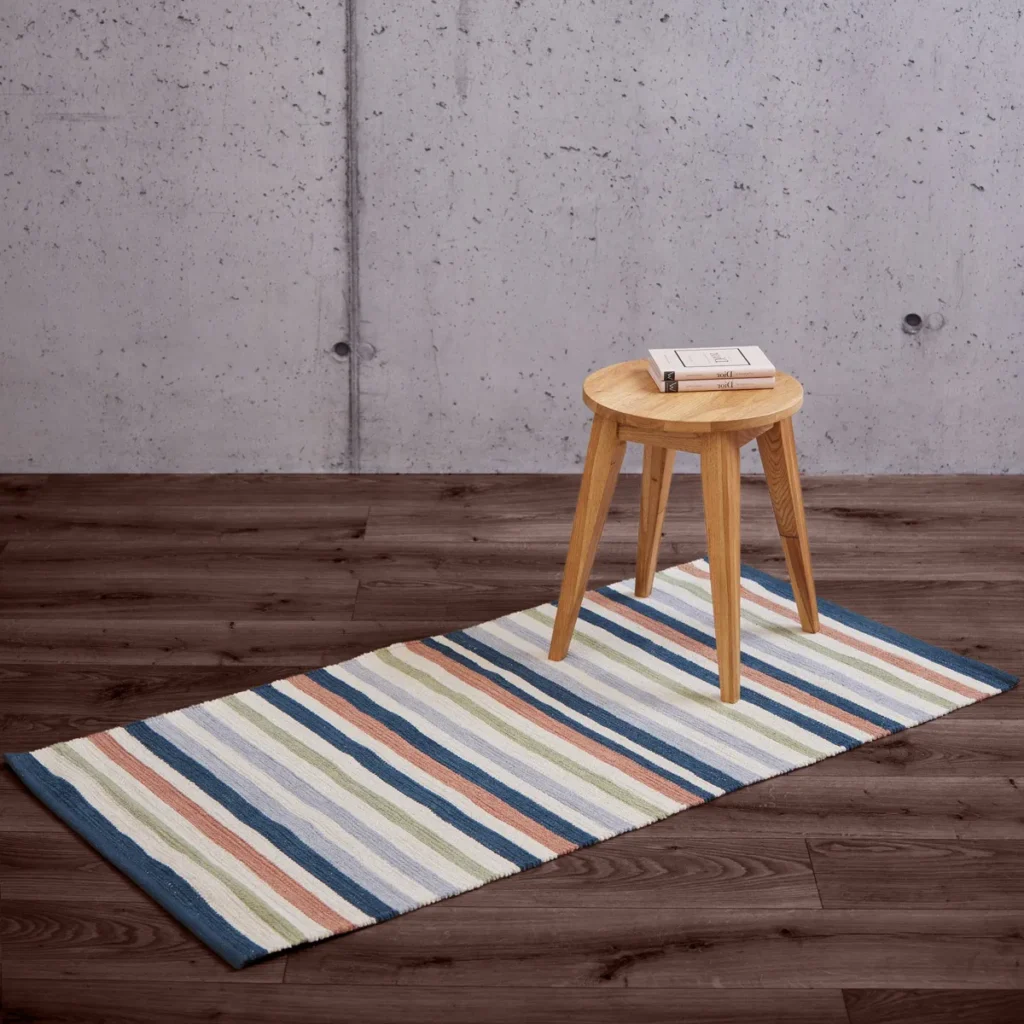
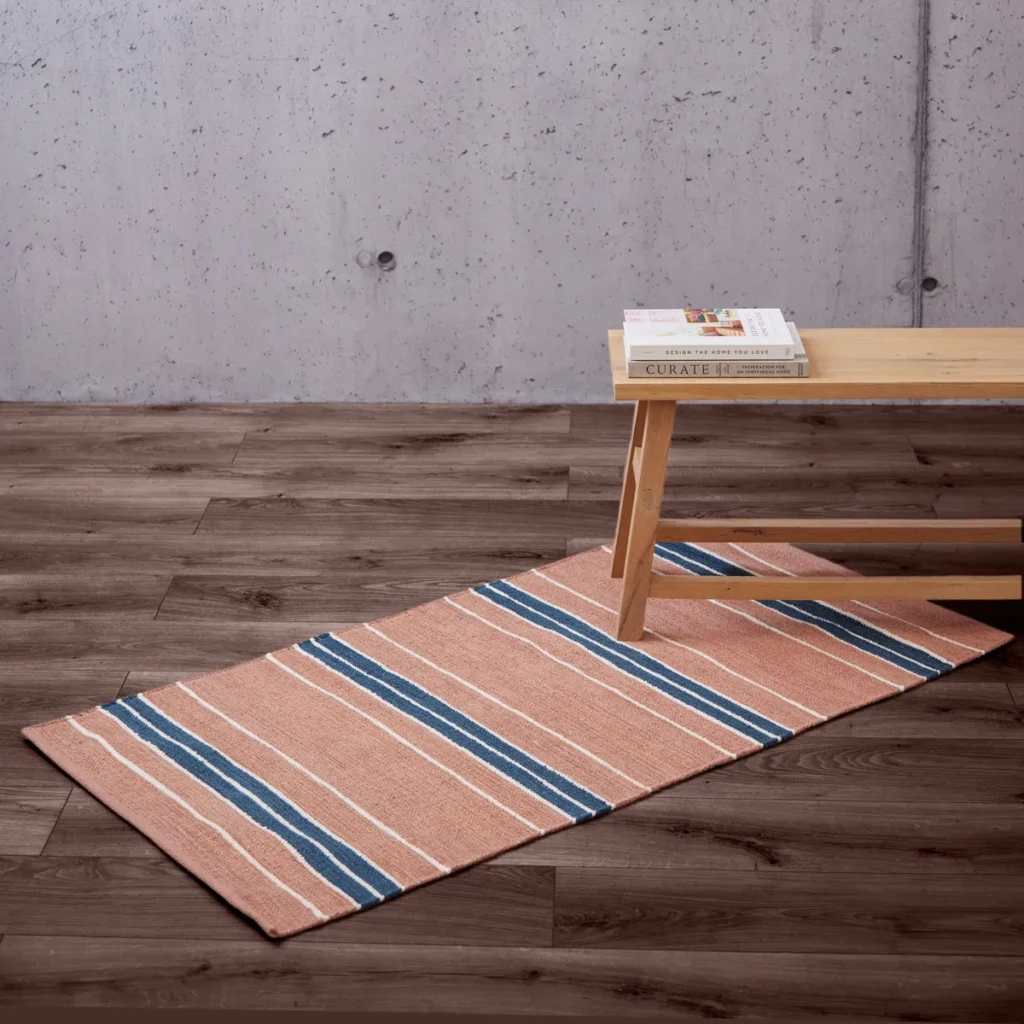
Hallways are different: here, a runner isn’t just decorative—it acts like visual guidance. It narrows or elongates perception and makes long spaces feel deliberate rather than transitional.
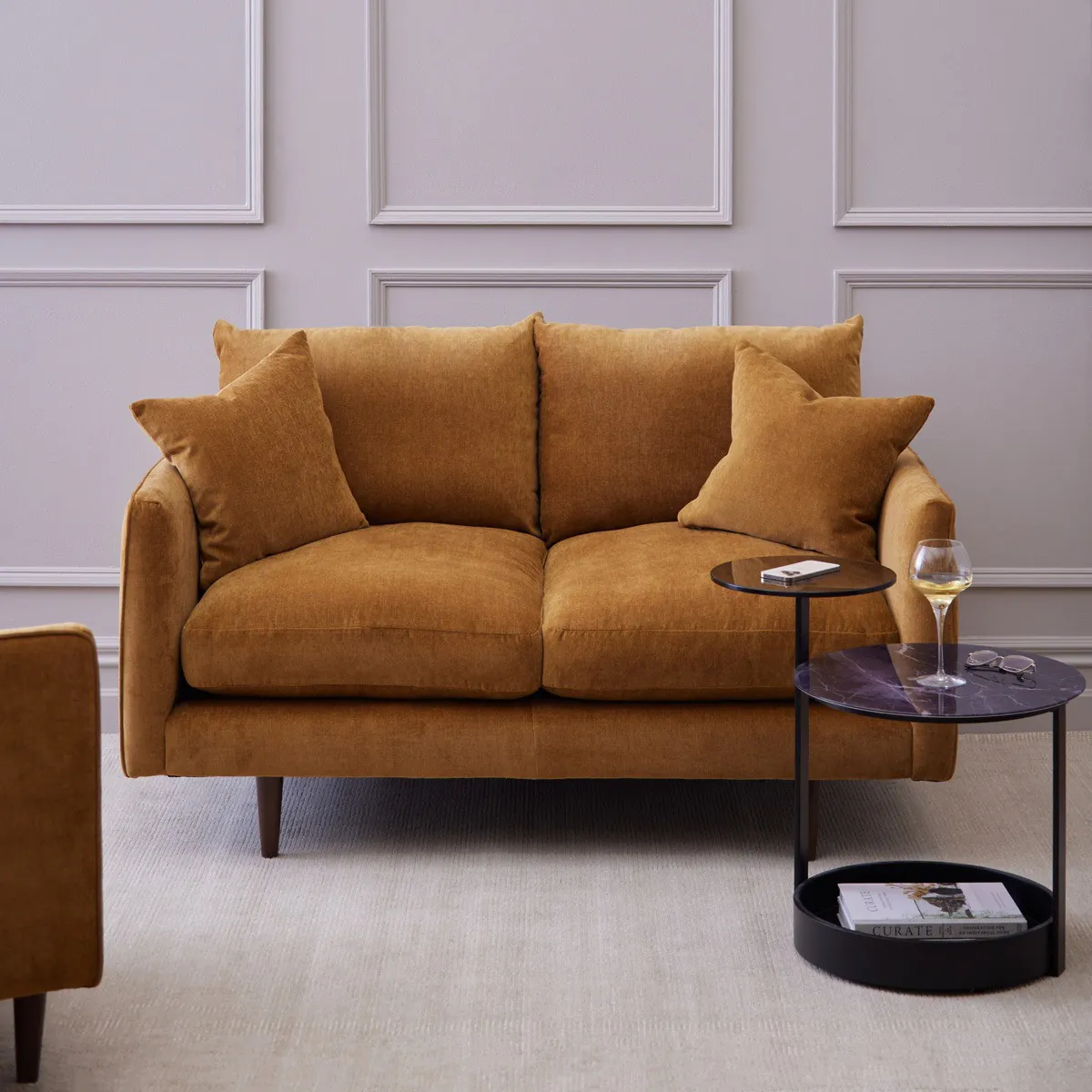
A rug tends to feel most settled when it connects with the furniture around it, rather than sitting separately beneath it. In a living room, this might mean the front legs of sofas and chairs rest on the rug, helping the seating area feel more unified.
In hallways, runners are usually chosen to follow the length of the space, giving a gentle sense of direction while protecting flooring.
Getting the size right often allows the rest of the design to fall into place more easily.
Material – Choose What Suits Your Everyday Life
Different materials bring different qualities, and the best choice often depends on how the room is used.
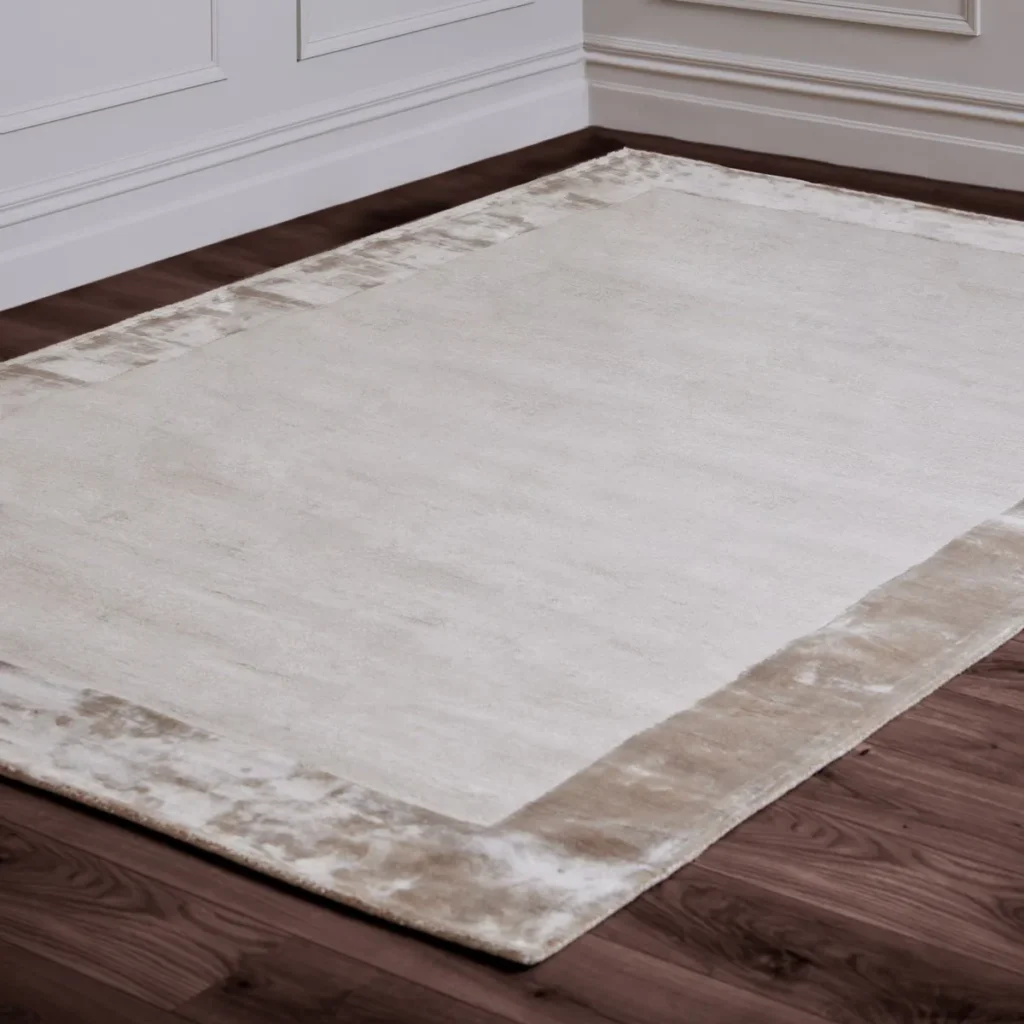
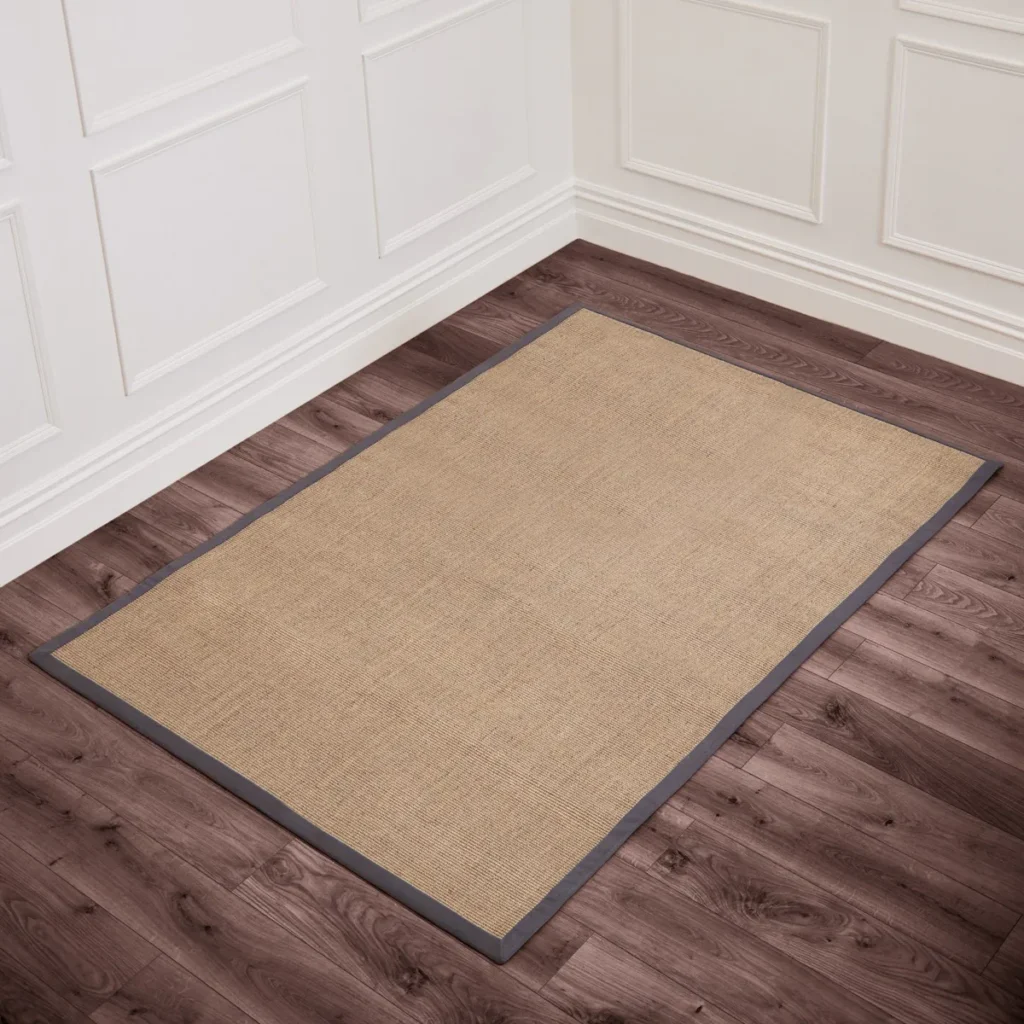
Wool rugs are valued for their softness and durability, making them suitable for busy family spaces. Jute and sisal bring a natural texture that works well in areas where a more structured, earthy feel is preferred. Cotton rugs can offer a lighter, more relaxed finish, while synthetic blends are often chosen where practicality and easy maintenance are a priority. Meadows & Byrne collections tend to lean towards natural fibres, which sit comfortably within both classic and contemporary homes and age well over time.
Colour is Less About Matching, More About Balance
A common misconception is that rugs should “match” a room. In well-designed interiors, they rarely do.
Instead, they either:
- quiet a busy room (soft neutrals)
- ground a light room (darker, earthy tones)
- or unify mixed materials (beige, grey, warm stone tones)
The goal is not harmony in the obvious sense—it’s visual stability. A rug should reduce noise in a room, not add another competing voice. Rather than matching everything exactly, rugs often work well when they echo tones already present in the space — in wood finishes, upholstery, or soft furnishings — helping the room feel naturally connected.
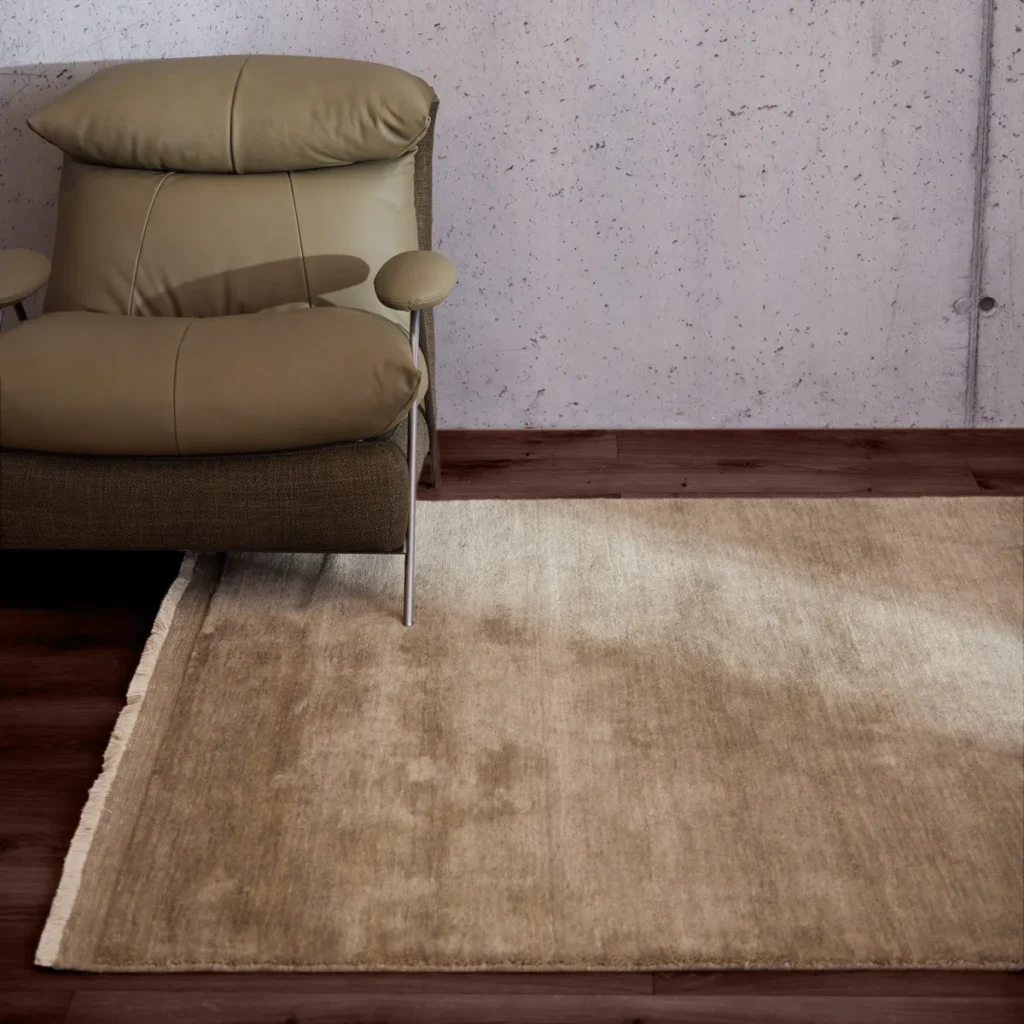
Colour in a rug often works best when it supports the overall feeling of the room. Soft neutrals such as beige, grey, or warm stone tones tend to blend easily with a wide range of interiors. Slightly deeper shades can help ground a lighter room, while warmer tones can bring a sense of comfort and intimacy.
Pattern – Adding Interest in a Considered Way
Pattern should solve a problem, not create one.
Pattern can bring a lovely sense of character to a room, particularly when the rest of the space is quite simple. Patterned rugs work best when something in the room already feels too static. A very minimal room can handle geometry or subtle motifs. A room already full of texture usually benefits from restraint instead.
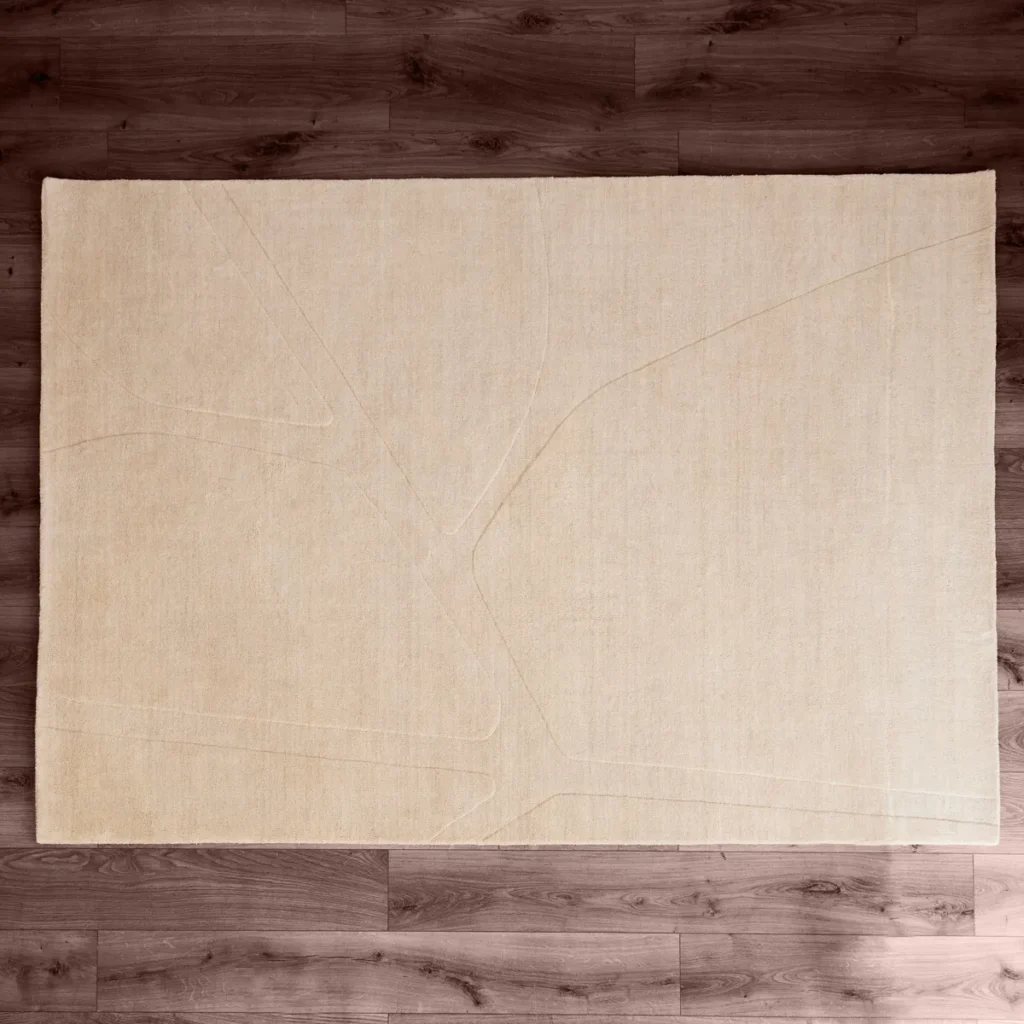
The strongest interiors often rely on texture rather than pattern; woven finishes, slight tonal variation, or natural irregularity rather than bold graphics.
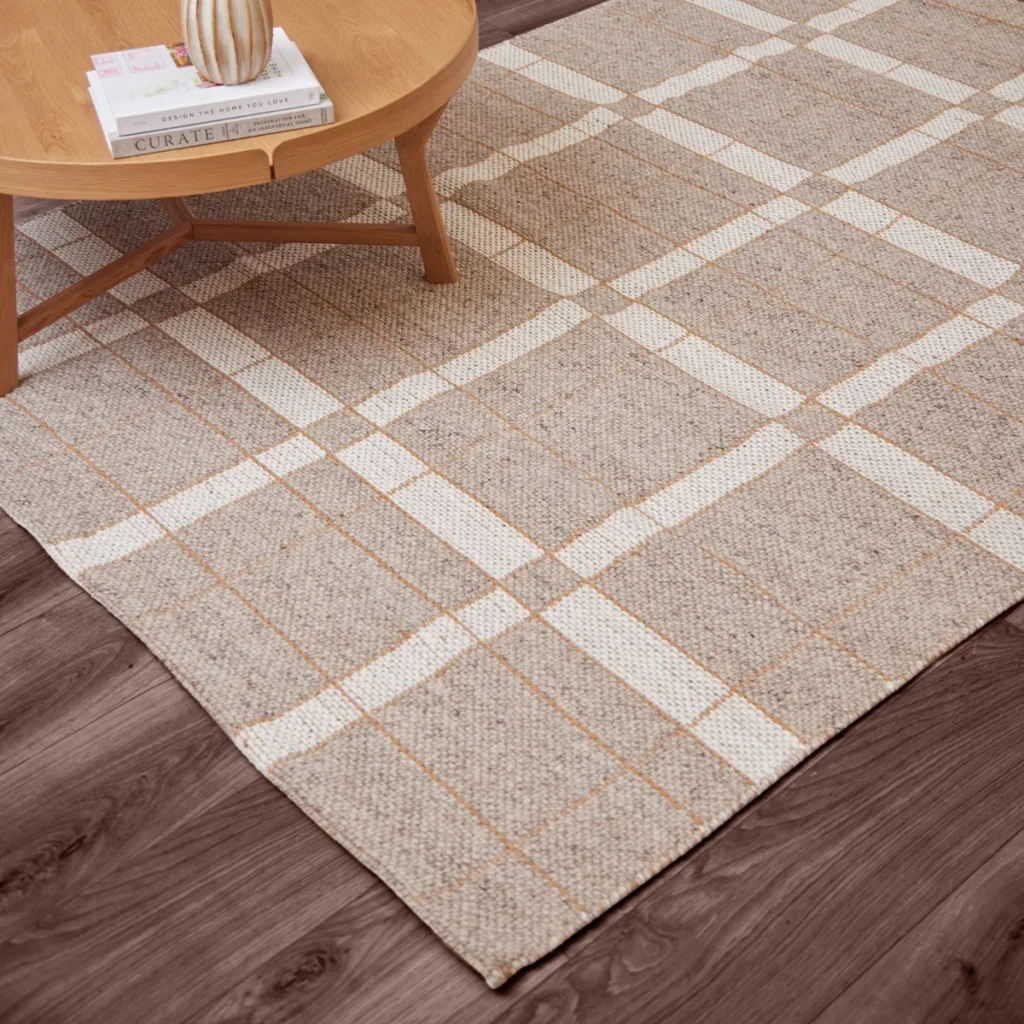
Subtle geometric designs or gentle textural patterns often sit well in modern interiors, while more traditional motifs can complement classic furnishings. In spaces where there is already a lot happening visually, a quieter rug can help balance things out.
It’s often less about choosing something bold or plain, and more about finding the level of detail that feels comfortable in the room.
Lighting & Placement: How the Rug Lives in the Space
The way a rug looks can shift with natural and artificial light throughout the day, which is worth keeping in mind when choosing tones and textures.
Soft daylight tends to highlight texture, while evening lighting can deepen colour and create a cosier feel. This is why it can be helpful to imagine the rug in different moments of the day, not just in the shop or online. This is why a rug that feels “flat” in a shop can suddenly feel rich at home; or vice versa. Placement also plays a role in how settled the room feels. A rug that sits evenly within the furniture layout often helps everything feel more composed.
Rugs Bring Everything Together
Cohesion, not just decoration is the real goal. The best rugs don’t announce themselves. They do something more important: they unify.
They connect furniture that would otherwise feel scattered. They warm spaces that feel too hard. They guide movement without blocking it. And in homes that follow the Meadows & Byrne aesthetic – calm, curated, slightly natural, and unfussy; they often disappear into the design while still doing most of the structural work. The result is usually a room that feels comfortable, cohesive, and gently finished rather than styled all at once.